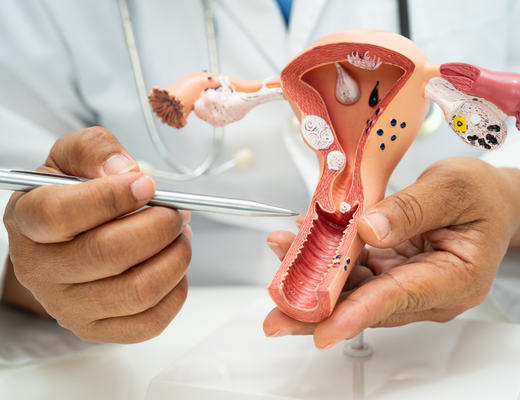
Uterine fibroids are benign (non-cancerous) tumors that develop from the muscle tissue of the uterus. The uterus is a muscular organ, and these tumors are referred to as myomas (“myo” means muscle, and “oma” means growth or tumor). You may also see the term leiomyoma, which refers specifically to tumors arising from smooth muscle.
Despite the name, fibroids are not made of fibrous tissue. These growths are very common and are malignant in less than 1% of cases. When removal is necessary, precautions are taken to safely contain the tissue and prevent any potential spread.
Fibroids can develop in different locations within the uterus. They may grow within the uterine wall (intramural), extend through the wall (transmural), project to the outer surface (subserosal), or grow into the uterine cavity (mucosal).
Not everyone experiences every symptom. The severity often depends on the size, number, and location of the fibroids.

Uterine fibroids are common and often vary widely in size, number, and location. Not all fibroids require treatment, especially if symptoms are mild or absent. However, when symptoms begin to affect daily life, evaluation is important to determine the best course of action.
Treatment decisions are based on your symptoms, overall health, and future goals, including fertility. Regular monitoring and open communication with your physician can help ensure that any changes are addressed early and appropriately.
Uterine fibroids are typically identified through a combination of medical history, physical examination, and imaging studies. Their size, number, and location help guide diagnosis and treatment planning.
The first step is a comprehensive evaluation to assess symptoms and determine how fibroids may be affecting surrounding organs. Imaging may be used to confirm their presence and better understand their impact.
Fibroids can place pressure on nearby organs within the pelvis, such as the bladder, bowel, and ureters. Because the pelvis is a confined space, larger or multiple fibroids can lead to discomfort and organ dysfunction.
Treatment may be recommended in cases of:
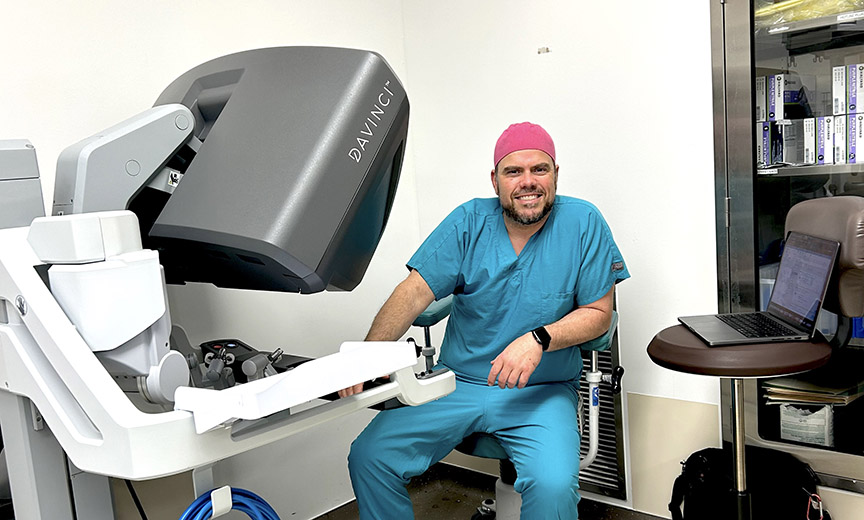
Dr. Lucas focuses on safely managing uterine fibroids using minimally invasive surgical techniques whenever possible. The goal is to relieve symptoms while preserving fertility when appropriate.
Each treatment plan is tailored to the individual, taking into account symptoms, fibroid characteristics, and patient goals. When surgery is performed, careful techniques are used to remove fibroids while protecting surrounding structures.
Dr. Lucas works closely with patients to monitor symptoms and adjust treatment as needed, ensuring a personalized and effective approach to fibroid care across Maine and the New England region.